
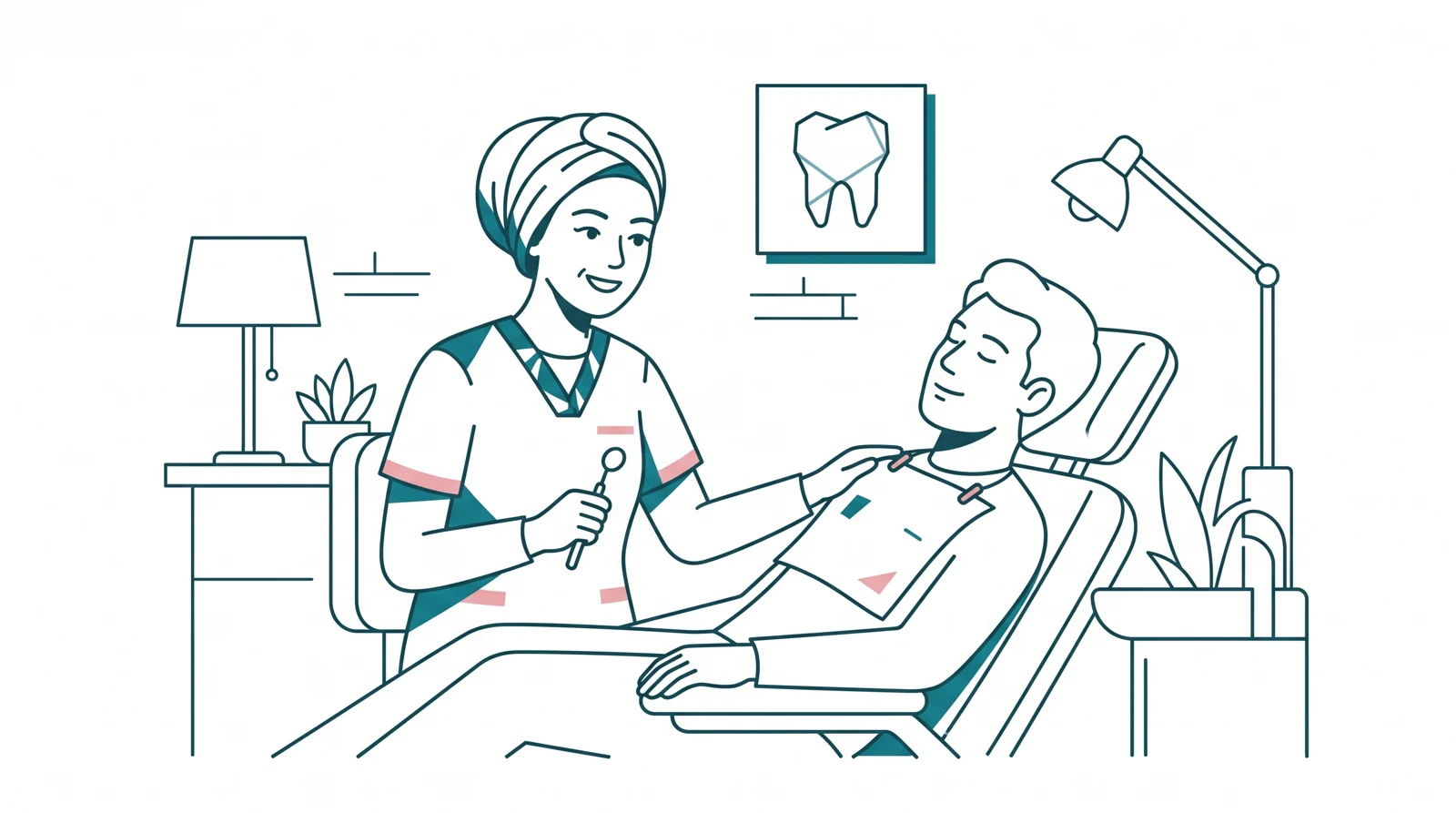
Will wisdom tooth removal hurt?
No — not during the procedure. Before anything starts, we fully numb the area with local anaesthetic, so you feel pressure and some movement but not pain. This is the same gentle, painless approach we take with every tooth extraction.
Afterwards, it’s normal to feel some soreness once the numbness wears off. It’s usually mild, peaks in the first day or two, and settles quickly with simple painkillers and a cold compress against the cheek. Most patients tell us the visit was far easier than they’d feared.
When does a wisdom tooth need to come out?
Not every wisdom tooth (gigi bongsu) needs removing. If it has erupted fully, sits in the right place and isn’t causing trouble, it can stay.
We recommend removal when a wisdom tooth is:
- Impacted — stuck under the gum or bone and unable to come through properly
- Causing pain or repeated infection around the gum
- Decayed and too far back to restore reliably
- Crowding or damaging the healthy tooth in front of it
- Trapping food in a way that keeps causing gum problems
An X-ray is the only way to see the angle of the roots and how the tooth sits, which is why we assess before deciding anything.
Simple vs surgical extraction — what’s the difference?
How the tooth is removed depends on whether it has come through the gum. This affects the appointment and your recovery time.
| Simple extraction | Surgical extraction | |
|---|---|---|
| When it’s used | Tooth has erupted normally | Tooth is impacted or below the gum |
| Anaesthetic | Local (numbing) | Local (numbing) |
| Typical time | Shorter, straightforward | Longer, more involved |
| Recovery | 2–4 days for the worst of it | Up to a week or more |
| Stitches | Usually none | Sometimes, often dissolvable |
Either way, you’re numbed and comfortable throughout, and we take our time to keep the removal gentle.
What does recovery look like day by day?
Recovery is faster than most people expect. Here’s the general pattern for a straightforward case:
- Day 1: Rest. Some swelling and mild soreness is normal. Bite gently on the gauze, use cold compresses, and eat soft, cool food.
- Days 2–3: Swelling often peaks then starts to ease. Keep the area clean and avoid chewing on that side.
- Days 4–5: Most people feel much more comfortable and return to normal routines.
- Week 1–2: The socket continues to close and heal. Any stitches dissolve or are removed.
Following your aftercare closely is what keeps recovery smooth — gentle salt-water rinses after the first 24 hours, no smoking, no straws, and no vigorous rinsing that could dislodge the healing clot.
In pain now? Don’t wait it out
A sore or swelling wisdom tooth rarely fixes itself, and it’s easier to treat before it flares into a bad infection. At FTS Chin Dental in Likas, we’ll assess it — usually with an X-ray — explain your options honestly, and give you a clear estimate before anything begins.
Families across Kota Kinabalu have trusted us with anxious, painful visits for over 20 years, earning a 4.9-star rating from 400+ Google reviews. If a wisdom tooth is bothering you, message us on WhatsApp and we’ll get you seen and comfortable. It’s also worth catching problems early at a routine check-up and X-ray.